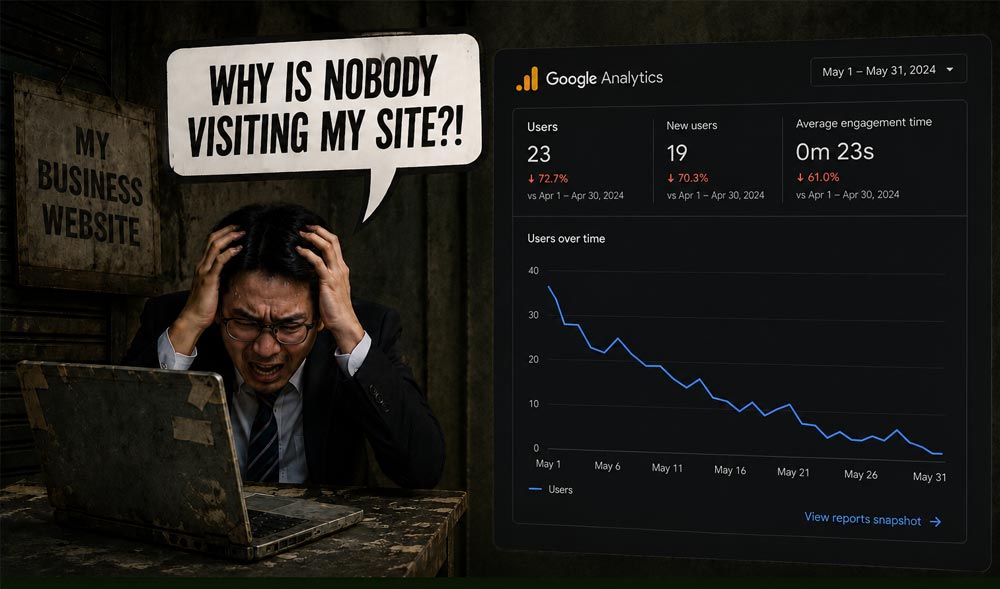


For the past two decades, Search Engine Optimization has been the undisputed king of online visibility. Build backlinks, target the right keywords, nail your Core Web Vitals — and Google rewards you with traffic. It’s a system millions of businesses have learned to play well.
But the rules of the game are changing, and fast.
A new discipline called Generative Engine Optimization (GEO) is reshaping how brands think about online discoverability. And if you’re running a business with an online presence — which, let’s face it, is everyone — it’s time to understand what GEO is, how it differs from traditional SEO, and why you can’t afford to ignore either one.
First, Let’s Revisit SEO
Search Engine Optimization is the practice of improving your website so it ranks higher in search engine results pages (SERPs) — primarily Google, but also Bing and others. It works through a well-established set of signals: keyword relevance, backlink authority, page speed, mobile-friendliness, and overall content quality.
The goal of SEO is simple: get found. When someone searches for “ABC Company” you want your site to appear near the top of that list of blue links. A user clicks, lands on your site, and hopefully becomes a client.
SEO is still enormously valuable. It’s measurable, battle-tested, and continues to drive significant organic traffic for businesses across every industry.
So, What Is GEO?
Generative Engine Optimization is the practice of optimizing your content so that AI-powered platforms — think ChatGPT, Google’s AI Overviews, Perplexity, and Microsoft Copilot — reference or cite your brand in their generated responses.
Here’s the key shift: these AI tools don’t hand users a list of links to browse through. They synthesize information from multiple sources and deliver a single, conversational answer. If your content is what informed that answer, your brand gets featured — potentially without the user ever needing to click anywhere.
While SEO is about earning a click, GEO is about becoming the answer itself.
How Are They Different?
The two strategies share the same underlying mission — connecting your expertise with the people looking for it — but they operate in fundamentally different ways.
What they optimize for: SEO targets traditional search engines that rank pages by links and keywords. GEO targets AI engines that evaluate content by factual accuracy, authority, and how clearly and reliably information is structured.
How success is measured: In SEO, you track keyword rankings, organic traffic, and click-through rates. In GEO, you measure whether your content is being cited, referenced, or summarized within AI-generated responses. A successful GEO outcome might mean a user asks ChatGPT about your service area, receives a well-informed answer that mentions your agency — and decides to reach out without ever visiting your blog.
What signals matter most: Traditional SEO still leans heavily on backlinks as proof of authority. GEO shifts the weight toward content clarity, structured formatting, verified statistics, and topical depth. AI engines also pull from sources beyond your own website — third-party mentions, forums, review platforms, and industry publications all factor in.
The user journey: SEO leads users through a familiar path: search → list of results → click → explore. GEO compresses that journey dramatically: prompt → AI synthesizes an answer → user acts on it. This makes being the cited source extraordinarily valuable, particularly for high-intent queries.
Why This Matters for Your Business Right Now
The numbers are hard to ignore. According to recent data, traditional organic search traffic dropped around 21% year-over-year for the average website. In that same period, traffic referred by AI platforms like ChatGPT, Perplexity, and Gemini increased nearly ten times over.
Meanwhile, Google’s own AI Overviews — the summaries that now appear at the very top of many search results — are reducing click-through rates for traditionally high-ranking content by significant margins. Users are getting their answers before they even scroll to the results.
This doesn’t mean SEO is dead. Far from it. But it does mean that ranking alone is no longer enough. You need to be the source that AI trusts — not just the site that Google finds.
GEO in Practice: What Actually Works
If you want your content to show up inside AI-generated answers, here are the strategies that research consistently points to:
Write with authority and back everything up. AI engines prioritize factual, well-sourced content. Cite reputable data, name your sources directly in the text (not just as hyperlinks), and include verifiable statistics. Vague claims get passed over; concrete evidence gets cited.
Structure your content for machine readability. Use clear heading hierarchies, add schema markup (Article, FAQ, HowTo), keep sentences direct, and lead each section with its most important takeaway. Well-organized content is easier for both humans and AI systems to parse and extract.
Build authority beyond your own website. AI engines don’t just look at your site — they evaluate your broader presence. That means earning mentions on platforms like Reddit, LinkedIn, and industry publications, collecting genuine reviews, and cultivating brand recognition across multiple channels.
Demonstrate genuine expertise. Both traditional search algorithms and AI engines are increasingly prioritizing E-E-A-T: Experience, Expertise, Authoritativeness, and Trustworthiness. Author credentials, original research, and first-hand insight all send strong signals.
Keep content fresh. AI-powered search tools, especially Google’s AI Overviews, tend to favor recently updated content. Regular publishing and updating your cornerstone pages signals relevance.
GEO Doesn’t Replace SEO — It Builds on It
This is perhaps the most important point: GEO is not a replacement strategy. The fundamentals that make great SEO — quality content, technical accessibility, clear structure, genuine authority — are the exact same foundations that make content AI-friendly.
Think of it this way: SEO gets your content into the library. GEO gets it quoted by the librarian.
The brands that will win in this new landscape are those who treat the two strategies as complementary layers of a unified approach. Strong SEO ensures your content is discoverable and indexed. Strong GEO ensures it’s trusted, cited, and woven into the answers that AI platforms deliver to your potential customers.
A Note for Web Design Clients
If you’ve worked with us on your website, you already have a head start. Well-structured pages, fast load times, semantic HTML, and clear content architecture aren’t just good for Google — they’re exactly what AI engines need to interpret and reference your site with confidence.
As search behaviour continues to evolve, we’re staying ahead of the curve so your site isn’t just visible — it’s influential. If you’d like to explore how your current web presence stacks up for both SEO and GEO, we’d love to have that conversation.