
You’ve just launched your new website. In its native Traditional Chinese, it looks absolutely stunning—clean, balanced, and highly authoritative. But then you click the language toggle to check other versions.
Suddenly, a menu item in German wraps onto three lines, breaking your clean header. A button in Arabic is pushed to the wrong side of the screen, completely reversing your visual hierarchy. A description in Thai has its tone marks clipped, making it unreadable. And that elegant, compact grid layout you loved? Completely broken.
This is one of the most common pitfalls we see when working with businesses in Hong Kong and globally. When Traditional Chinese is your design baseline, it is easy to create a highly compact, beautiful layout. However, scaling that layout to a multilingual platform often breaks your user experience (UX) if you treat other language groups as a mere translation afterthought.
To build a truly global website, your design process must accommodate the unique structural characteristics of different language families from day one.
Here are the five mistakes that break multilingual websites—and how to design for global compatibility.
Why Multilingual Design is More Than Just Translation
Translation is about words; localization is about space, flow, and cultural context.
When your primary design is optimized for Traditional Chinese, you are designing for a logographic, highly compact character script. Because CJK (Chinese, Japanese, Korean) characters pack immense meaning into tiny squares, they require very little horizontal space.
When you expand to a multilingual platform, you must design for three other major script families:
- Alphabetic/Expanding Scripts (e.g., Latin, Cyrillic, Greek): These scripts read left-to-right but expand horizontally—often by 50% to 100% compared to character-based scripts.
- Right-to-Left (RTL) Scripts (e.g., Arabic, Hebrew): These require not just text translation, but a complete horizontal mirroring of your entire website layout, navigation, and visual flow.
- Complex / Tall Phonetic Scripts (e.g., Thai, Hindi, Vietnamese): These scripts feature complex vertical stacks of vowels, tone marks, and consonants that require significantly more vertical breathing room to prevent clipping.
If your layout is built only for the tight, compact nature of Traditional Chinese, it will inevitably break when forced to accommodate these global script variations.
1. Using a Rigid Typographic System for All Scripts
Applying the same font family, line-height, and padding rules across different language families guarantees a broken UX. System fonts that render beautiful English or Spanish will often fail on Traditional Chinese, resulting in inconsistent stroke weights. Meanwhile, tight Chinese vertical spacing will clip the ascenders and descenders of taller scripts like Thai or Arabic.
- The Fix: Establish dedicated, native-feeling font stacks for each script family. For Traditional Chinese, use modern, highly legible system-compatible fonts like PingFang HK, Noto Sans TC, or Source Han Sans HK. Pair these with clean, internationally optimized fonts for Latin, Cyrillic, and RTL scripts.
- Adjust Line-Height and Padding Dynamically: While Latin scripts are highly readable at a line-height of 1.5, Traditional Chinese requires a line-height of 1.8 to 2.0 to keep dense characters legible. Conversely, scripts with tall vertical markers (like Thai) require dynamic vertical padding inside buttons and headers to prevent critical tone marks from being chopped off by the browser.
2. Designing Fixed Layouts That Cannot Adapt to Text Expansion and Flow
Because Traditional Chinese is so compact, designers often create tight grids and fixed-width containers. But a four-character Chinese button like 「立即申請」 (Apply Now) is incredibly small. In expanding alphabetic scripts like French (“Postulez dès maintenant”) or German (“Jetzt online bewerben”), the text can easily take up three to four times the physical width. Furthermore, RTL scripts require the entire layout to flow in reverse.
- The Fix: Design with flexible, responsive layouts (such as Auto-Layout in Figma and Flexbox/Grid in CSS) rather than fixed-width boxes.
- Build in a Space Buffer: Always leave a 30% to 50% empty space buffer around buttons, menus, and text blocks in your primary Traditional Chinese layout. This ensures that expanding alphabetic scripts have room to scale without wrapping awkwardly.
- Mirroring for RTL: Ensure your CSS is built to handle layout direction shifts dynamically (using logical properties like
margin-inline-startinstead ofmargin-left). This allows the entire interface to flip seamlessly when an RTL language like Arabic is selected.
3. Treating the Language and Region Switcher as an Afterthought
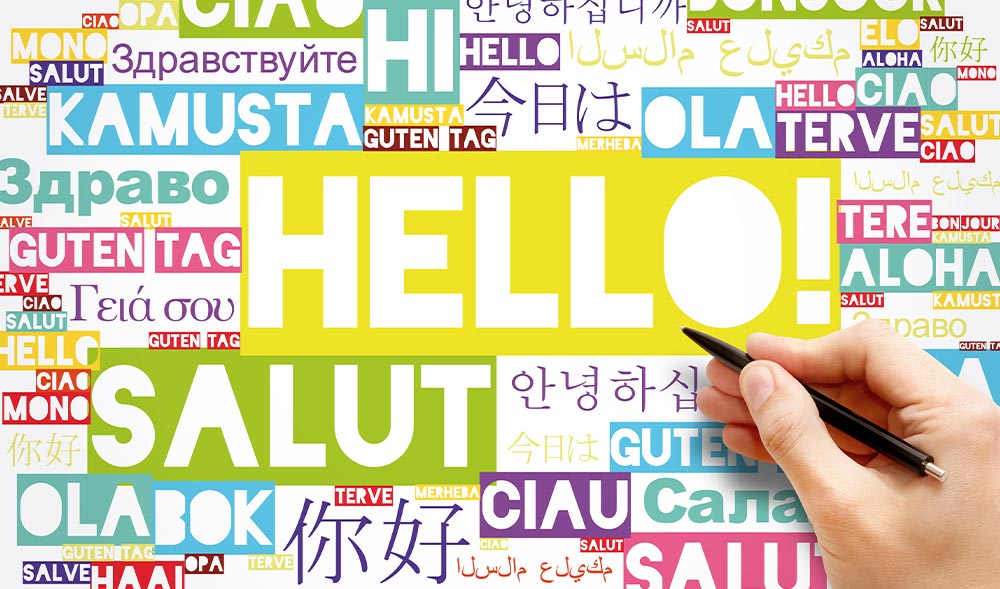
With a truly global, multilingual website, basic toggles like “EN / 中” are no longer sufficient. They leave visitors confused about whether “中” refers to Traditional Chinese (HK/Taiwan) or Simplified Chinese (Mainland China/Singapore), and offer no clear path for users of other languages.
- The Fix: Position a clear, accessible language selector in a prominent global location, such as the top right of your navigation header.
- Label Scripts Natively: Avoid using national flags to represent languages (flags represent countries, not scripts, and can lead to geopolitical friction). Instead, list each language option in its native script:
- 繁體中文 (香港)
- 简体中文
- English
- 日本語
- العربية
- Remember User Preferences: Use cookies or
localStorageto remember a visitor’s language choice across sessions. A returning visitor should land on their preferred version automatically without having to manually toggle it every visit.
4. Translating Word-for-Word Instead of Localizing the Tone
A literal, direct translation of your Traditional Chinese copy into other languages will rarely feel natural. Communication styles vary drastically across cultures.
For example, high-context cultures (common in East Asia) often build trust through formal, highly detailed, and contextual explanations. Low-context cultures (common in Western Europe and North America) value highly direct, concise, and action-oriented messaging.
- The Fix: Treat every language version as a separate content brief, not a translation task. The core value proposition remains the same, but the tone, framing, and emphasis should be tailored to the cultural expectations of each target audience. A professional localization or “transcreation” process ensures that your brand copy sounds native, natural, and trustworthy to every visitor.
5. Forgetting That Search Visibility and Discovery are Localized
A beautifully designed multilingual website will fail to generate global inquiries if search engines only index and understand your primary Traditional Chinese pages. Search engines treat different language versions as completely separate entities, and different regions rely on different platforms (e.g., Google globally, Baidu in Mainland China, Yahoo in Japan).
- The Fix: Implement precise
hreflangtags in your website’s header. These tags tell search engines exactly which version of a page to serve to which audience based on their language and geographic location. - Localize Search Metadata: Ensure that URL slugs, meta titles, meta descriptions, and image alt texts are fully translated and optimized using region-specific keywords and localized search terms.
What Genuine Multilingual Design Feels Like
When a multilingual website is executed properly, the experience in every single language feels completely native. The typography looks natural, the spacing is perfectly balanced, the layout flows gracefully, and the tone of the copy never feels compromised.
Whether a visitor reads your site in Traditional Chinese, English, Arabic, or Thai, they should feel as though the website was designed specifically for them—not accommodated as an afterthought.
If your current website struggles to scale comfortably across global languages and scripts, it is a design and structural challenge worth addressing. At Epic Digital Solutions, we specialize in building flexible, world-class multilingual digital experiences that help businesses scale globally from Hong Kong.